|
|

|
 +51 982 027 145 +51 982 027 145 |
|
|
|
+51 982 027 145 |
When one thinks of Argentina, visions of dancing the Tango all night long come to mind, but it is so much more. One of the largest countries in South America, Argentina is as diverse as it is beautiful. Travel in the country requires air travel as the distances are long.
The country has much to see from Iguazu Falls in the north to Patagonia in the south and the town of Bariloche in the middle of the country.
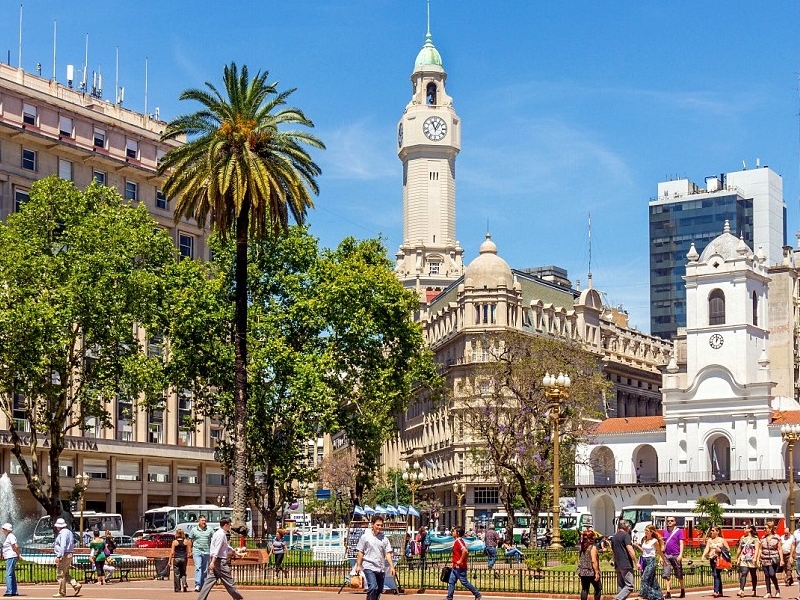
In this article we will concéntrate on the vibrant, lively city of Buenos Aires, the capital of Argentina. The city is full of interesting things to do and see. A few days spent is never a waste of time, learn the history, experience the culture and taste some of the best meat anywhere on the planet in the cosmopolitian city of Buenos Aires.
Buenos Aires is a city that has reinvented itself multiple times—evolving from a plagued, isolated outpost on the edge of the Spanish Empire into the booming "Paris of South America," and eventually into the resilient, creative cultural capital it is today.
The Spanish recognised the strategic importance of the Río de la Plata and wanting to curb British and Portuguese smuggling, the Spanish Crown finally legalized the port. In 1776, King Carlos III declared Buenos Aires the capital of the newly minted Viceroyalty of the Río de la Plata. Wealth began pouring into the city, and the local merchants became wealthy.
When Napoleon invaded Spain and captured the King in 1808, the porteños saw their chance. On May 25, 1810, local citizens gathered in front of the town hall (El Cabildo) and overthrew the Spanish Viceroy during the May Revolution—establishing the country's first autonomous government.
By the late 19th century, Argentina had become one of the wealthiest nations on Earth, driven by the mass export of beef, grain, and wool to Europe.
With this sudden, immense wealth, the city leaders decided to completely redesign Buenos Aires to mirror Western Europe. They tore down old colonial buildings to construct wide, treelined boulevards, grand parks, and opulent Beaux-Arts palaces.
During this same period, millions of European immigrants—primarily from Italy and Spain— flooded into the city looking for a better life. This massive cultural melting pot reshaped the city's slang, architecture, cuisine, and gave birth to the melancholic rhythm of Tango in the working-class dockside tenements of La Boca and San Telmo.
The mid-1900s brought massive political and social shifts, dominated by the rise of Juan Domingo Perón and his wildly popular, charismatic wife, Eva "Evita" Perón.
Despite facing dramatic economic rollercoasters over the decades, Buenos Aires has preserved its fierce pride, intellectual depth, and legendary cultural energy. It boasts more bookstores per capita than almost any other city in the world, a world-famous culinary and nightlife scene, and an architectural charm that serves as a living museum of its grand history.
It might seem unusual for a graveyard to be a city's top attraction, but Cementerio de la Recoleta is a stunning outdoor museum of art and history. It is a literal city of the dead, filled with over 6,400 elaborate, above-ground marble mausoleums and gothic chapels built by Argentina's elite. Visitors flock here to see the remarkably modest family tomb of Eva Perón (Evita), the nation's legendary and beloved former First Lady.
San Telmo is the city's oldest, most atmospheric neighborhood, famous for its cobblestone streets and colonial architecture. If you are there on a Sunday, the Feria de San Telmo is an absolute must. Miles of street vendors take over Calle Defensa, selling vintage leather goods, old jewelry, and classic glass seltzer bottles. On weekdays, you can still visit the historic indoor Mercado de San Telmo, which features an incredible mix of antique stalls and trendy gourmet food booths.
Located in the gritty, working-class dockside neighborhood of La Boca, El Caminito is a famous pedestrian alleyway lined with corrugated iron houses painted in a chaotic array of bright, mismatched colors. This tradition started with Italian immigrants who used leftover paint from the shipyards to decorate their homes. Today, it’s alive with street tango dancers, artisan stalls, and outdoor restaurants. Just a few blocks away is La Bombonera, the iconic, vibrating stadium of the world-famous Boca Juniors football club, where Diego Maradona once played.
Buenos Aires is the birthplace of tango, and you can't leave without experiencing its seductive rhythm. You can choose your own adventure here:
The Grand Spectacle: Book a formal dinner-and-show at a historic theater like Tango Porteño or El Viejo Almacén for world-class musicians, elegant costumes, and professional choreography.
Visit a Milonga—a local social club where everyday porteños (locals of Buenos Aires) gather late at night to drink wine and dance tango together just for the love of it.
Widely considered one of the top five opera houses in the world due to its acoustical perfection and mind-bogglingly opulent architecture. Completed in 1908 after taking nearly 20 years to build, it features European marble, gold leafing, and massive French stained glass. You can book an incredibly informative 50-minute guided architectural tour during the day, or better yet, purchase a ticket to a live ballet, opera, or symphony performance to experience the legendary acoustics for yourself.
While the city is world-famous for its beef, the top tier of its restaurant scene also celebrates the massive waves of European and Jewish immigrants that shaped Argentina's identity.
Five exceptional, distinctly different restaurants to eat in Buenos Aires represent the best of the city's food scene:
This is not just a steakhouse; it is the definitive temple of Argentine asado. Routinely ranked among the top 10 restaurants in the world and holding a Michelin star, Don Julio works exclusively with grass-fed Aberdeen Angus and Hereford cattle, aged in-house for at least 21 days. The skirt steak, ribeye and their legendary grilled sweetbreads. Pair it with their heirloom tomato salad, which tastes like tomatoes used to taste decades ago.
Owned by the same team behind Don Julio, El Preferido takes the concept of a traditional, neighborhood immigrant tavern) and elevates it to perfection. It celebrates Spanish and Italian-Argentine comfort food made with elite, locally sourced ingredients. Try their perfectly fried, breaded sirloin cutlet which is widely considered the best in the city. Also, do not skip their house-cured charcuterie or the classic Argentine potato tortilla.
Chef Tomás Kalika honors the culinary map of the Jewish diaspora—from Eastern Europe to the Middle East—and completely reimagines it using modern techniques and Argentine flair. It's a deeply emotional, flavorful tribute to immigrant grandmothers’ recipes. Try the Pastrón (a massive brisket short rib, brined for ten days, smoked, and served over a potato latke with a fried egg) or their wood-fired babaganoush.
As the only restaurant in Buenos Aires to hold two Michelin stars, chef Gonzalo Aramburu offers a breathtaking 18-step tasting menu. The dishes focus intensely on seasonal Argentine ingredients—from Patagonian seafood to wild mushrooms—transformed using avant-garde molecular gastronomy.
Self-described as an "Asian Parrilla," this wildly popular spot takes premium Argentine meats and fuses them with bold Japanese, Korean, and Vietnamese flavors. It is a masterclass in how modern Buenos Aires chefs are breaking traditional culinary rules. Try the Katsusando (a thick, melt-in-your-mouth cut of panko-breaded beef tenderloin sandwiched between toasted brioche) and the sweetbreads cooked with miso and sweet corn.
Where you choose to stay in Buenos Aires dictates the rhythm of your trip. The city is a patchwork of distinct neighborhoods: Recoleta gives you classic, Parisian old-world luxury; Palermo puts you in the center of the trendy boutique and café culture; and Puerto Madero offers sleek, modern architecture right on the water.
Three exceptional hotels in Buenos Aires showcase the best of these diverse neighborhoods
Located in Recoleta, Aristocratic, grand, and timelessly luxurious. It boasts the only outdoor heated pool in the historic Recoleta district, surrounded by beautiful landscaped gardens. It is also a major culinary destination in its own right, housing Elena (a spectacular, Michelin-selected contemporary steakhouse) and Pony Line, a polo-inspired lounge where locals and travelers mingle over world-class cocktails and burgers. It boasts the only outdoor heated pool in the historic Recoleta district, surrounded by beautiful landscaped gardens.
Located in Palermo Soho, Creative, sophisticated, cozy, and deeply connected to Argentine identity. You step right out of your hotel door into the city’s best independent boutiques, street art, and specialty coffee shops. The service is incredibly warm and personalized, and there is a peaceful private courtyard library complete with a fireplace and a hot tub for unwing after a day of exploring.
Located in Puerto Madero East, Theatrical, bold, cinematic, and unapologetically maximalist. The hotel is a hub for the city's nightlife and art scenes. Its outdoor pool features an iconic, massive golden crown fountain structure rising from the water. Inside, you can find the Library Lounge (a plush bar lined with antique books) and El Cabaret, an intimate, red-velvet theater that hosts Rojo Tango, widely regarded as the most exclusive and seductive cabaret tango show in Buenos Aires.
Take a trip to Buenos Aires, one of the most iconic cities on the planet, full of beauty and history. Take in a tango show and take home lasting memories. Contact us for more information.
Published 2026-08-09
Contact us
URB. Manuel Prado calle Sacsayhuaman F10, Apt. 4 |
The Company |
Follow us
TRAVELISTAPERU.COM © 2026 |
Contact us
URB. Manuel Prado calle Sacsayhuaman F10, Apt. 4 |
The Company |
Follow us
TRAVELISTAPERU.COM © 2026 |

 +51 982 027 145